
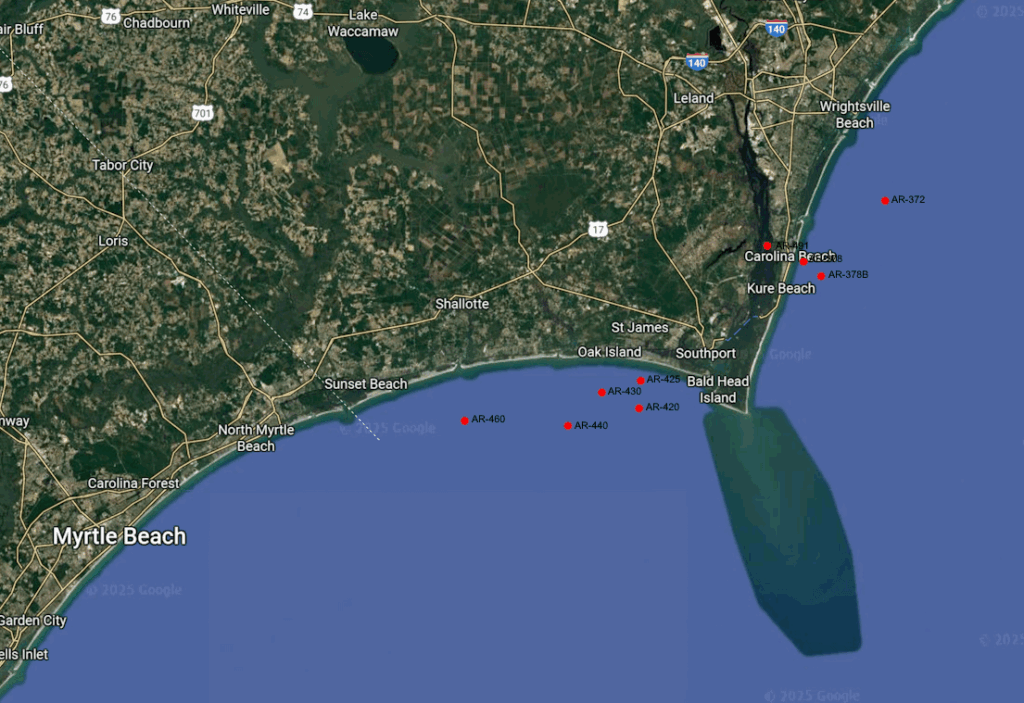
North Carolina is home to an impressive network of underwater attractions—43 ocean artificial reefs and 25 estuarine reefs—carefully created and maintained by the NC Division of Marine Fisheries. These reefs aren’t just great for marine life; they’re also fantastic spots for anglers and divers looking for an easy adventure.
Many of the ocean reefs sit just offshore, with most less than 10 miles out and all reachable from any maintained inlet along the coast. If you prefer calmer waters, you’ll find 25 estuarine reef sites tucked into Pamlico Sound, Bogue Sound, the New River, and the Cape Fear River. Fourteen of these are special Oyster Sanctuaries, designed to help restore oyster populations and create thriving ecosystems.
Whether you’re fishing, diving, or just love discovering hidden coastal gems, these reefs add a whole new layer of wonder to North Carolina’s waters.
Why Does North Carolina Build Artificial Reefs?
In simple terms: reefs create homes for fish, healthy fish habitats create strong fish populations, and strong fish populations make for amazing fishing and diving. It’s a win all around.
While North Carolina does have natural reefs, a lot of the sea floor along our coast is flat and sandy—great for swimming but not so great for marine life looking for shelter. In fact, only about 3% of the state’s offshore waters have natural hard-bottom habitat. So when materials like concrete pipe, reef balls, old vessels, and other structures are placed on the ocean floor, they instantly create new places for life to grow.
Once these “artificial” structures settle in, the magic begins: barnacles, corals, sponges, seaweed, and other marine organisms quickly take over. Small baitfish move in next, and before long, larger predatory fish follow. These reefs essentially mimic the natural hard-bottom ecosystems that already exist in North Carolina—just in places where nature didn’t originally provide them.
Artificial reefs also play a huge ecological role. They provide crucial spawning and feeding grounds for many important fish species. That’s why the N.C. Coastal Habitat Protection Plan recommends expanding reef construction to help counter past habitat loss and water quality issues that have impacted coastal environments.
Some reefs are even built with a very specific purpose: Oyster Sanctuaries. Found in estuarine waters, these specialized artificial reefs create the perfect setting for oysters to thrive, reproduce, and boost local oyster populations. And as a bonus, they support plenty of finfish too. These sanctuaries are only built in spots that don’t already have natural hard-bottom habitat, ensuring they truly enhance the ecosystem.
Supporting North Carolina’s Reef Programs
North Carolina is actually home to one of the most active reef-building programs in the country—and it’s powered by a mix of passionate experts and community support. A small but dedicated team within the Division of Marine Fisheries plans, builds, maintains, and studies the reef systems year-round.
Funding comes from several places, including:
- The North Carolina General Assembly
- The U.S. Fish and Wildlife Service Sport Fish Restoration Program
- The Coastal Recreational Fishing License Grant Program
But the community plays a big role too. Fishing clubs, local businesses, private reef associations, and everyday coastal enthusiasts help by donating materials, raising funds, and sharing ideas for future projects. Universities, labs, and government agencies also contribute by researching and monitoring the reefs.
The result? A thriving network of underwater habitats that supports marine life, enhances fishing and diving, and showcases North Carolina’s commitment to its coastal environment.
If you’re exploring the coast—whether by boat, dive gear, or even just curiosity—North Carolina’s artificial reefs are one of the state’s coolest hidden treasures.
North Carolina’s artificial reefs are buzzing with marine life, offering anglers and divers the chance to encounter a wide variety of finfish throughout the year. Different species come and go depending on the season and the reef’s location, so there’s always something new to discover.
As a quick guide, nearshore reefs sit about 0–5 miles off the beach, while offshore reefs are found 5 miles and farther out. The fishing calendar below highlights the best times to find popular species at these sites—but for real-time info on what’s biting, the latest rigs, and the best techniques, your local tackle shop is gold. You can also check out the Division of Marine Fisheries’ Recreational Fishing Reports for updates straight from the experts.
Before you head out on the water, take a moment to review current fishing regulations and the Rules, Safety, and Etiquette guidelines for fishing and diving around artificial reefs. A little prep goes a long way toward making your trip safe, fun, and successful.
Whether you’re casting a line or slipping beneath the waves, North Carolina’s reef system offers endless opportunities for adventure.
North Carolina’s artificial reefs have become a huge draw for recreational SCUBA divers—and it’s easy to see why. With vibrant fish life, unique structures like reef balls, and an incredible lineup of sunken ships, these reefs offer some of the most exciting underwater experiences on the East Coast. In fact, North Carolina is often celebrated as the top wreck-diving destination in North America, with more than 70 ships intentionally sunk throughout the reef system. Divers from all over the world come here to explore history up close, capture stunning underwater photos and videos, and enjoy activities like spearfishing.
Diving conditions can vary from site to site, but the sweet spot for warm water and clear visibility is typically June through October, when temps hover around 70–80°F and visibility can stretch past 30 feet. As a general rule, reefs more than 3 miles offshore tend to offer the clearest water. There are 29 offshore reef sites with average depths under 60 feet—perfect for divers with basic SCUBA certifications who want to explore something extraordinary.
Of course, conditions depend on a lot of factors: currents, weather, depth, tide, and time of year can all play a big role in visibility and safety. Always plan ahead, dive with caution, and consider booking through one of the fantastic local dive shops that know the reefs best.
Whether you’re hunting for shipwrecks, marine life, or unforgettable underwater adventures, North Carolina’s artificial reefs deliver world-class diving right off the coast.