
Loading and Capacity Plates
The capacity plate on your boat is there to help you stay safe on the water. It shows the maximum amount of weight—people, fuel, and gear—that your boat can safely carry. Things like the size of the hull, how the engine is mounted, and the boat’s overall design all affect how many people it can handle. Remember, the number of seats doesn’t necessarily mean that many people can safely ride. You’ll usually find the capacity plate on the inside of the transom or near the helm, where you can easily see it before heading out.
It’s important never to remove or change the capacity plate. While it isn’t a federal offense for an owner to exceed the listed limits, many states do have laws against overloading a boat or installing a motor with more horsepower than recommended. Going over these limits can also void your insurance, which is the last thing you want if something goes wrong.
Any boat under 20 feet with an inboard, outboard, or stern-drive engine that was built after November 1, 1972 must have a capacity plate. Boats like sailboats, kayaks, canoes, and inflatables don’t need one. If you’re on a personal watercraft or another type of boat without a plate, check the owner’s manual or follow your state’s boating guidelines to know what’s safe.
The U.S. Coast Guard reports that capsizing is one of the leading causes of fatal boating accidents—and overloading is a common reason. If your boat feels off balance, sluggish, or just “not right,” trust your gut. Redistribute the weight or lighten the load before you get underway.
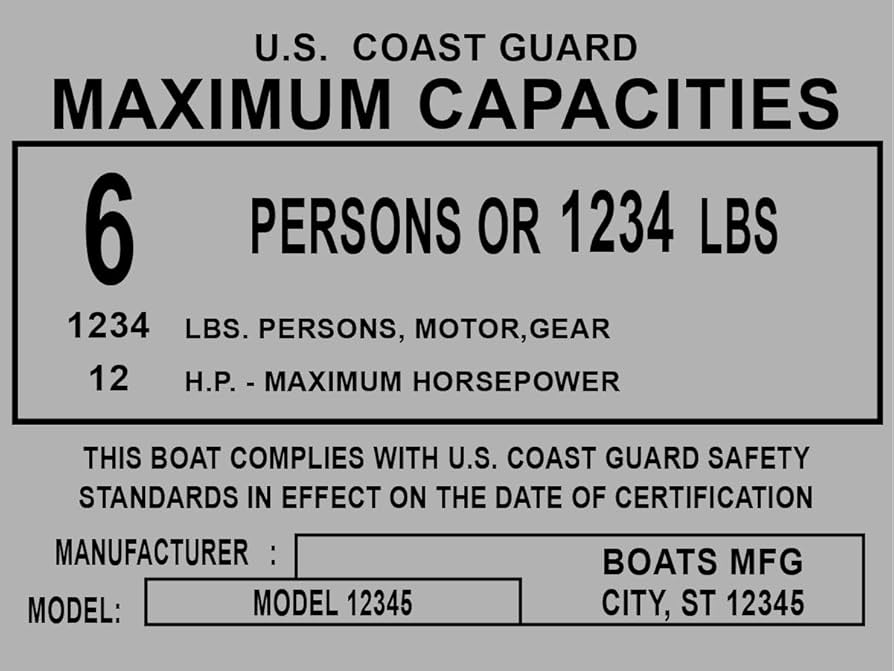
For boats with outboard engines, the capacity plate will list three things:
- how much weight in people you can carry,
- the total weight allowed for people, motor, and gear, and
- the maximum horsepower your boat can safely handle.
For boats with inboard or stern-drive engines, the plate will show the maximum weight for people and the total weight for people plus gear. (The Coast Guard’s horsepower standards don’t apply to these types of boats.)
For manually powered boats—like rowboats or small paddle craft—the plate includes the maximum weight for people, and the combined limit for people plus gear.
Keep in mind that these limits apply to good weather. When conditions get rough, it’s smart to stay well below the listed maximums. Even in calm weather, try to spread out weight evenly, keep heavy items low in the boat, and avoid sudden shifts in where people or gear are located—especially if you’re close to your boat’s maximum capacity. People are a “live load,” meaning they move around, and that movement affects stability much more than static weight does. Whenever possible, have everyone stay seated or shift position only when the boat is stopped or moving slowly.
If your boat is under 20 feet or doesn’t have a capacity plate, you can estimate how many people it can safely hold with a simple formula:
Boat length (ft) × Beam (ft) ÷ 15
For example, a 20-foot boat with a 6-foot beam can generally carry about 8 average-size adults (around 150 lbs each). If you know your crew weighs more than average, reduce the number accordingly. And remember—this formula assumes calm conditions. If the weather looks choppy or unpredictable, it’s always safer to bring fewer people and lighten the load.